Projects linked to the South American Grambank node
Lines of research:
Description, documentation and revitalization of endangered languages

Description, documentation and revitalization of endangered languages
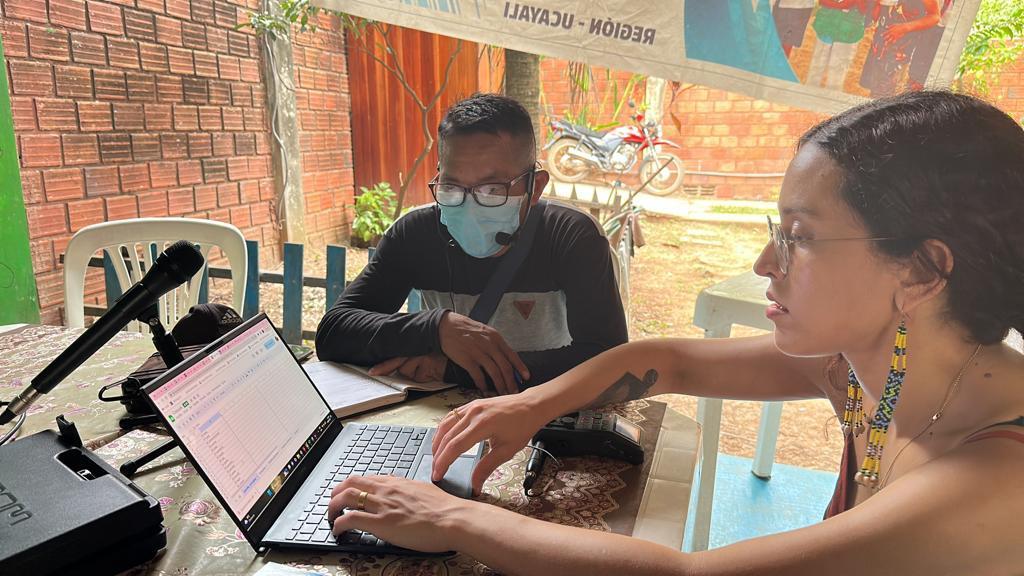
Grambank, an initiative by the Department of Linguistic and Cultural Evolution at MPI-EVA, is the most comprehensive typological database to date, encompassing 198 logically independent grammatical features and currently covering over 2,500 languages. We propose to continue supporting the first Grambank node in South America, established through a previous research agreement between PUCP and MPI-EVA.
This year, we aim to leverage Grambank data to
(i) further develop two specialized databases that refine and expand typological distinctions within areas particularly relevant to South American languages—ergativity and noun categorization; and
(ii)test hypotheses related to language evolution and morphological complexity.
Below, we briefly outline these Grambank-related sub-projects.
This database will focus on the diverse forms of ergativity found across various language families and specific languages where ergativity is present, such as Pano languages, Pama-Nyungan languages, Hindi, Basque, and Trumai. Building on Grambank as a foundational resource, we will introduce finer distinctions to capture the different types of ergativity, examining the varying degrees and manifestations of ergative structures across these languages. This project will provide detailed classifications within the domain of ergativity, enabling researchers to compare and analyze how ergative structures vary and interact across genetic and geographical
lines.
This database will compile and analyze information on noun categorization systems, with a focus on noun classes and classifiers in Amazonian languages. The Amazon region presents unique challenges in distinguishing classifiers from noun classes due to their fluid boundaries, which has led to extensive discussions among Grambank coders. This project aims to address these complexities comprehensively by developing a specialized set of features to capture the nuances of Amazonian noun categorization systems. By focusing on South American languages, the database will underscore how classification systems in the Amazon context may challenge conventional typological distinctions, offering new insights into the diversity of classification systems on a global scale.
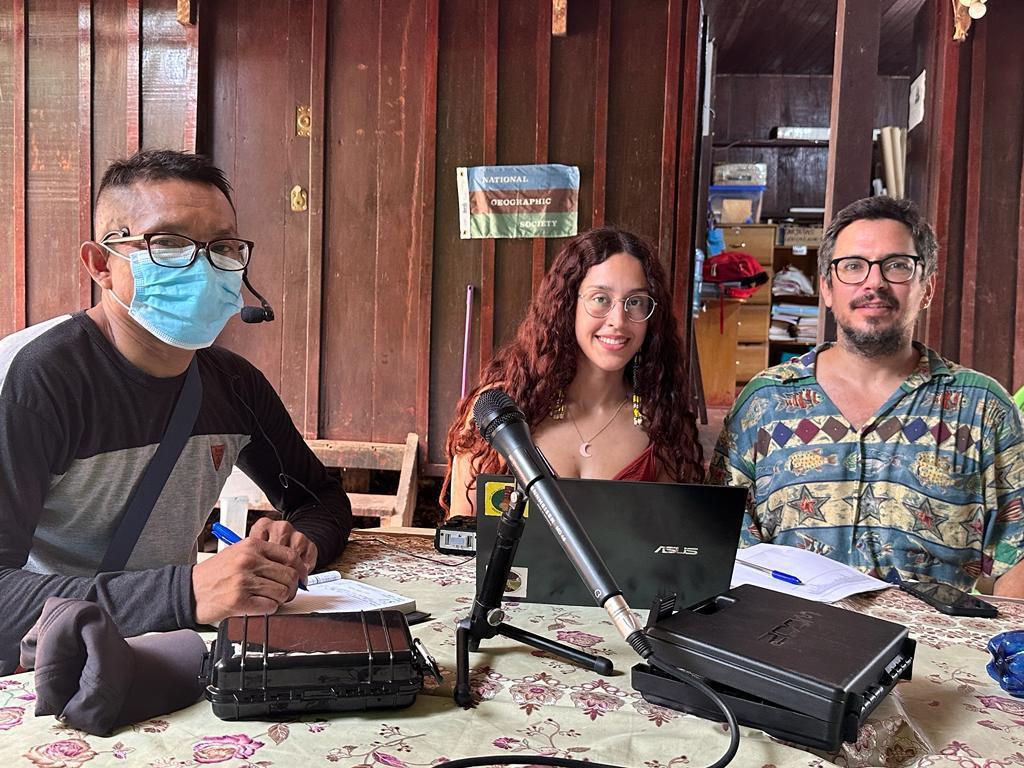
Amazonian languages typically have very small numeral systems or may lack numerals entirely. However, increasing economic and cultural pressures often drive the development of more complex systems for exact quantification. These emergent systems display unique properties of significant scientific interest. In this project, we are compiling a dataset of numerals and similar quantity-denoting expressions in Amazonian languages, drawing from both first-hand fieldwork and published sources, and meticulously coding their key characteristics. This data may be further integrated into Numeralbank and will be used to comparatively analyze the properties of neo- numerals and related forms. Additionally, we aim to investigate how these innovative quantification systems impact cross-cultural understandings of quantification and contribute to the study of how numerical systems emerge and evolve.